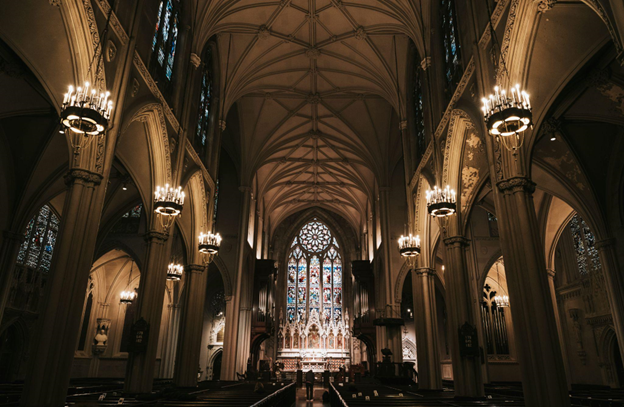
There are seasons in every spiritual life when what once felt vibrant begins to feel familiar, and Father Adam Park often speaks about how even steady believers can experience faith that feels more routine than renewing. The prayers are known by heart. The songs follow a predictable rhythm. Attendance remains steady, yet something inside feels quieter than before. In these moments, it can be tempting to question whether joy has faded or faith has weakened. Showing up becomes a habit. The words are familiar. The rhythm is predictable. And somewhere along the way, joy feels softer than it once did. This experience is more common than many admit.
Every spiritual journey has moments when faith feels alive and vibrant; there are also seasons when it feels steady but uninspired. The danger is not the routine itself. The danger is assuming that routine means something is wrong.
When Worship Becomes Familiar
Human beings adapt quickly. What once felt new eventually feels normal.
The first time someone attends a retreat, participates in a meaningful service, or experiences powerful music in worship, it can feel transformative. But repetition removes novelty. Familiarity replaces surprise. That does not mean grace has disappeared.
In fact, routine can be a sign of maturity. Just as long-term relationships move beyond constant emotional intensity into steady commitment, worship often moves from emotional highs into faithful consistency. The question is not whether routine exists. The question is how we respond to it.
Emotion vs. Commitment
Many people quietly equate spiritual vitality with emotional intensity. If worship feels moving, faith must be strong. If it feels ordinary, something must be wrong. But emotions fluctuate.
Joy in worship is not sustained by mood alone. It is sustained by intention and awareness. Feelings may come and go, but commitment carries faith forward.
Consider physical health. Exercise does not always feel exciting. Yet the benefits accumulate regardless of mood. Spiritual practices work the same way. Even when it feels ordinary, it matters to show up.
The Hidden Value of Faithful Attendance
There is quiet strength in steady presence.
Weekly worship creates structure. It anchors time. It reminds the heart of larger truths beyond daily responsibilities and pressures.
Even when enthusiasm feels low:
- The words still shape the mind.
- The prayers still form the heart.
- The community still provides support.
Routine worship is not empty repetition. It is a slow formation.
Growth is often invisible in the moment but powerful over time.
Why Joy Sometimes Fades
There are practical reasons worship can begin to feel routine:
- Overexposure to digital stimulation dulls attention.
- Chronic busyness reduces reflection.
- Fatigue limits emotional engagement.
- Unresolved stress crowds out gratitude.
When life is overloaded, spiritual attentiveness weakens.
Joy in worship does not disappear randomly. Often, it is overshadowed by distraction and exhaustion. Addressing these root causes can quietly restore depth.
Re-engaging the Heart
Rediscovering joy does not require dramatic change. It requires intentional presence.
Simple adjustments can make a meaningful difference:
- Arriving early instead of rushing
- Reading Scripture ahead of time
- Reflecting on one meaningful phrase afterward
- Sitting in silence for a few minutes before leaving
- Limiting phone use before and after service
Small shifts in posture lead to deeper awareness.
When worship becomes mechanical, the solution is rarely abandoning it. It is entering it more intentionally.
Participation Over Observation
Another reason joy fades is passive engagement.
Worship is not meant to be consumed like entertainment. It is meant to be entered.
Active participation changes the experience:
- Singing rather than listening quietly
- Praying intentionally rather than reciting automatically
- Listening for one personal takeaway
- Offering gratitude during the service
Joy often returns when engagement increases.
Community Restores Perspective
Faith was never meant to be lived alone.
Even when personal enthusiasm feels low, the gathered community carries shared strength. One person’s quiet season may coincide with another’s vibrant one. Together, stability forms.
Seeing familiar faces, hearing collective prayer, and participating in shared tradition creates continuity that extends beyond personal feelings.
Sometimes joy returns not through intensity but through belonging.
Routine as Stability
It helps to remember that routine is not the enemy of joy. Routine creates stability.
In relationships, daily conversations may not always be dramatic, but they sustain connection. In health, daily habits maintain strength. In faith, steady worship anchors identity. There is comfort in rhythm. There is depth in repetition.
The problem is not that worship becomes familiar. The problem is when attention drifts completely.
Finding Meaning in the Ordinary
Not every moment of worship will feel extraordinary. But meaning often hides in ordinary spaces.
A single line of Scripture may linger throughout the week. A short prayer may bring unexpected peace. A hymn heard countless times may resonate differently during a difficult season.
When expectations shift from seeking constant emotional highs to seeking steady formation, joy begins to feel quieter but more durable.
When Routine Is Actually Growth
What might feel like routine is actually maturity. Early faith often relies heavily on emotional affirmation. Deeper faith rests more on trust and consistency.
Continuing to worship faithfully even when feelings are neutral is not a sign of weakness. It is a sign of stability. Steady faith endures beyond emotional cycles.
A Gentle Invitation to Renewal
For those experiencing routine in worship, the solution is rarely drastic change. It is renewed attentiveness.
Consider:
- Praying specifically for openness before attending
- Reflecting on one area of gratitude
- Serving in a small capacity
- Speaking with a trusted spiritual mentor
Joy often returns gradually, not dramatically.
Faith does not need constant emotional excitement to be real. It needs faithfulness.
Worship may feel routine at times, but routine can be a gift. It provides rhythm in a chaotic world. It offers grounding when emotions fluctuate. It forms the heart quietly and steadily.
Joy in worship is not always loud. Sometimes it is a calm assurance. Sometimes it is quite peaceful. Sometimes it is simply the strength to keep showing up.
And often, that steady showing up is where the deepest growth happens.